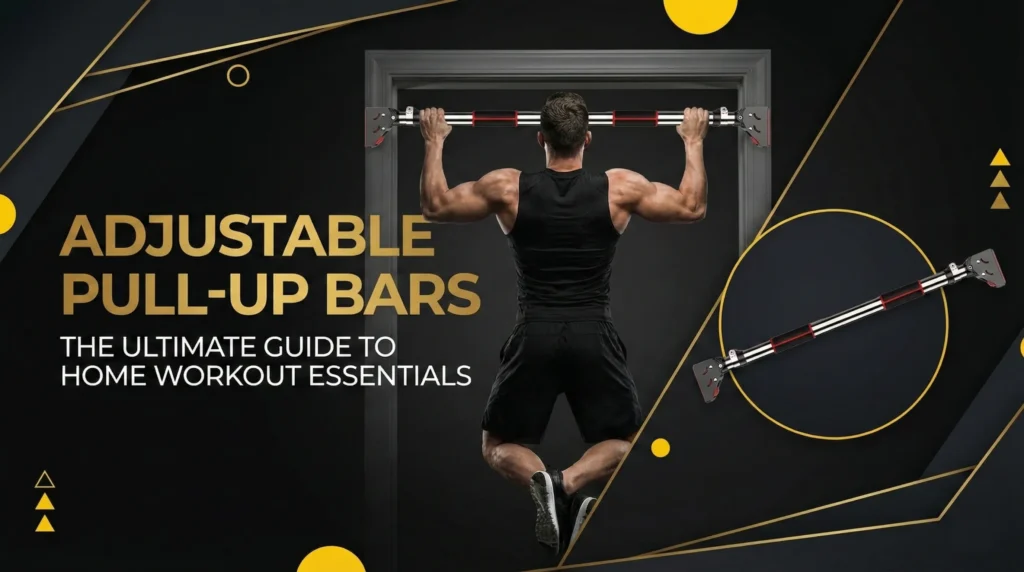
Adjustable pull-up bars are one of the simplest ways to build upper body strength at home without installing permanent equipment. They are compact, affordable, and designed to fit inside standard doorways. For people who train at home, especially in apartments, they are often the first serious strength tool purchased.
But “adjustable” does not mean universal. The mechanism, build quality, and door frame condition all matter.
Let’s break it down properly.
What Is an Adjustable Pull-Up Bar?
An adjustable pull-up bar is a horizontal steel bar that extends or hooks into a doorway. The adjustment refers to the width expansion so it can fit different door frame sizes.
Many doorway models adjust across a range in roughly this area, but the actual usable width depends on the specific design, so check the manufacturer’s stated range before buying.
There are two major types:
- Telescopic (twist-to-expand)
- Hook-style (leverage-mounted)
They look similar at a glance, but they function differently.
Telescopic Adjustable Pull-Up Bars
This is one of the most common designs in the market.
The bar expands by twisting it until it presses firmly against both sides of the door frame. Some models include an internal gear lock or safety screw to prevent rotation.
Strengths:
- Compact and minimal
- Easy to store
- Usually cleaner looking
- No drilling required
Weaknesses:
- Installation must be precise
- Door frame quality is critical
- Cheap versions may slip under heavy load
These are ideal for renters and smaller homes where permanent installation is not an option.
Hook-Style Adjustable Pull-Up Bars
This design hooks over the top of the door frame and uses leverage. When body weight is applied downward, the structure tightens against the frame.
Strengths:
- Typically more stable
- Often higher weight tolerance
- Multiple grip positions
Weaknesses:
- Bulkier
- Can leave marks on the frame
- Not suitable for fragile or decorative frames
If stability is the top priority and the doorway is strong, this version often feels more secure.
What Makes a Pull-Up Bar Truly “Adjustable”?
Adjustment refers mainly to width extension. The core features that define a good adjustable model include:
- Telescopic extension mechanism
- Locking or anti-rotation system
- Steel construction
- Rubber or silicone anti-slip ends
- Reinforced central tubing
Higher quality bars use thicker alloy steel and metal locking components. Lower quality models often use thinner tubing and weaker locking systems.
Who Should Use Adjustable Pull-Up Bars?
They are well-suited for:
- Beginners starting calisthenics
- People training at home
- Apartment residents
- Those who prefer portable equipment
They are not ideal for:
- Weak or hollow door frames
- Very wide openings beyond adjustment range
- Explosive kipping movements
- Extremely heavy dynamic training
These bars are designed for controlled bodyweight training, not aggressive CrossFit-style motion.
Exercises You Can Perform
An adjustable pull-up bar supports more than just pull-ups:
- Pull-ups (overhand grip)
- Chin-ups (underhand grip)
- Wide-grip pull-ups
- Dead hangs
- Hanging leg raises
- Isometric holds
- Assisted pull-ups using bands
- Inverted rows (when mounted lower)
For a single piece of equipment, it offers significant versatility.
Common Installation Mistakes
Many avoidable problems come from poor setup, incompatible door frames, or ignoring the manufacturer’s installation requirements rather than from the bar alone.
Common mistakes include:
- Not tightening properly
- Overtightening and damaging the frame
- Ignoring weight limits
- Installing on hollow or weak frames
- Not checking stability before each session
Proper installation and periodic checks are critical. For a step-by-step walkthrough, see our doorway pull-up bar installation guide, and compare the training use cases in our best doorway pull-up bar guide.
Related Pull-Up Bar Guides
- Best Pull-Up Bars for Home in India
- Best Doorway Pull-Up Bar for Home Workouts
- Doorway Pull-Up Bar Installation Guide
Final Thoughts
Adjustable pull-up bars solve a real problem: lack of space.
They allow consistent upper-body training without drilling into walls or installing permanent hardware. When used correctly and installed on solid frames, they are effective and practical.
They are not a replacement for heavy-duty gym rigs. But for controlled bodyweight strength work at home, they do exactly what they are designed to do.
FAQs
What is an adjustable pull-up bar?
An adjustable pull-up bar is a doorway-mounted strength training bar that expands or hooks into a door frame. It allows users to perform pull-ups, chin-ups, and hanging exercises at home without permanent wall installation. The adjustment mechanism fits different doorway widths.
How does an adjustable pull-up bar stay in place?
An adjustable pull-up bar stays in place either through pressure expansion (telescopic twist system) or leverage hooking over the door frame. Pressure-mounted models tighten against both sides of the frame, while hook-style models secure using downward body weight force.
Are adjustable pull-up bars safe?
Adjustable pull-up bars are safe when installed correctly on strong door frames. Safety depends on proper tightening, frame strength, and controlled movement. Models with locking systems and anti-rotation mechanisms provide additional stability compared to basic twist-only designs.
Do adjustable pull-up bars damage door frames?
Adjustable pull-up bars can leave minor compression marks or dents, especially with long-term use. Pressure-mounted bars create inward force, while hook-style bars apply downward leverage. Using protective padding reduces surface damage on wooden frames.
What weight can an adjustable pull-up bar support?
Most adjustable pull-up bars claim a weight capacity between 100–200 kg. However, safe support depends on frame strength, installation quality, and whether the user performs controlled or dynamic movements. Sudden swinging reduces effective load capacity.
Can beginners use adjustable pull-up bars?
Beginners can safely use adjustable pull-up bars for assisted pull-ups, negative reps, and dead hangs. They provide an accessible way to build upper-body strength at home without gym equipment. Proper installation and gradual progression are important for safety.
What exercises can you do with an adjustable pull-up bar?
An adjustable pull-up bar supports pull-ups, chin-ups, wide-grip variations, dead hangs, hanging leg raises, and isometric holds. When mounted lower, it can also be used for inverted rows and bodyweight rows.
What is the difference between telescopic and hook-style pull-up bars?
Telescopic pull-up bars expand by twisting to create pressure between door frames. Hook-style bars rest on top of the door frame and use leverage from body weight. Hook-style models are generally more stable but bulkier.
Are adjustable pull-up bars better than wall-mounted bars?
Adjustable pull-up bars are portable and rental-friendly, while wall-mounted bars offer higher stability and permanent installation. Adjustable bars are better for small spaces, whereas wall-mounted bars are suited for heavier or more advanced training.
How do you install an adjustable pull-up bar correctly?
To install an adjustable pull-up bar, extend or position it within a strong door frame, tighten until firm, engage any locking mechanism, and test with partial body weight before full use. Proper alignment and frame integrity are critical for safety.