
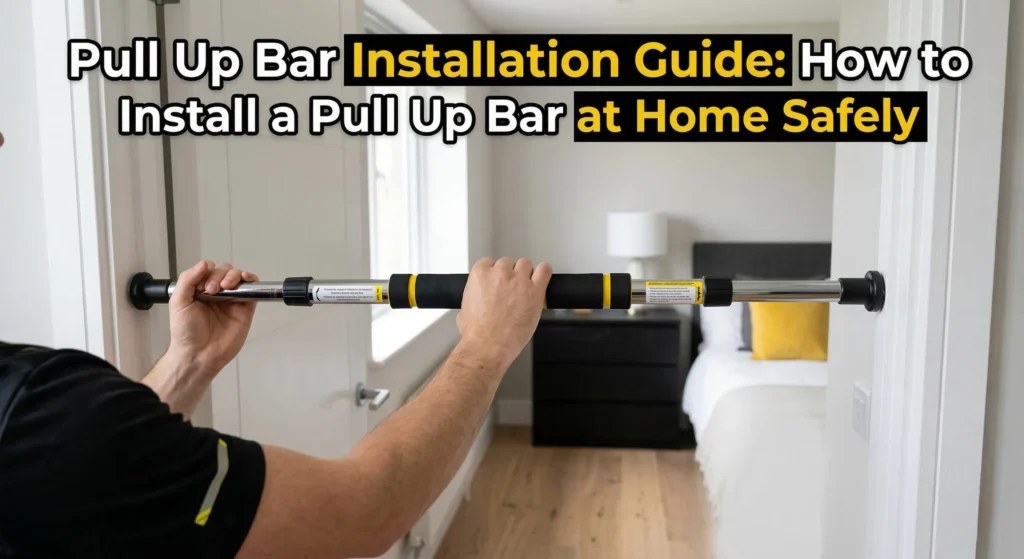
Installing a pull-up bar at home is one of the easiest ways to create an effective strength training setup without building a full home gym. A properly installed pull-up bar allows you to perform pull-ups, chin-ups, dead hangs, and other bodyweight exercises while using minimal space.
This guide explains pull up bar installation at home, including doorway setups, adjustable telescopic bars, and installation methods that require no drilling or screws. Whether you’re installing a doorway pull-up bar or a telescopic adjustable bar, understanding the installation process ensures safety and long-term stability.
What You Need Before Pull Up Bar Installation
Before starting any home pull up bar installation, it’s important to check a few basic conditions in your home.
Many adjustable doorway pull-up bars use pressure-based installation, but compatibility varies by model. Check the stated width range, frame depth, molding requirements, and mounting method before installing.
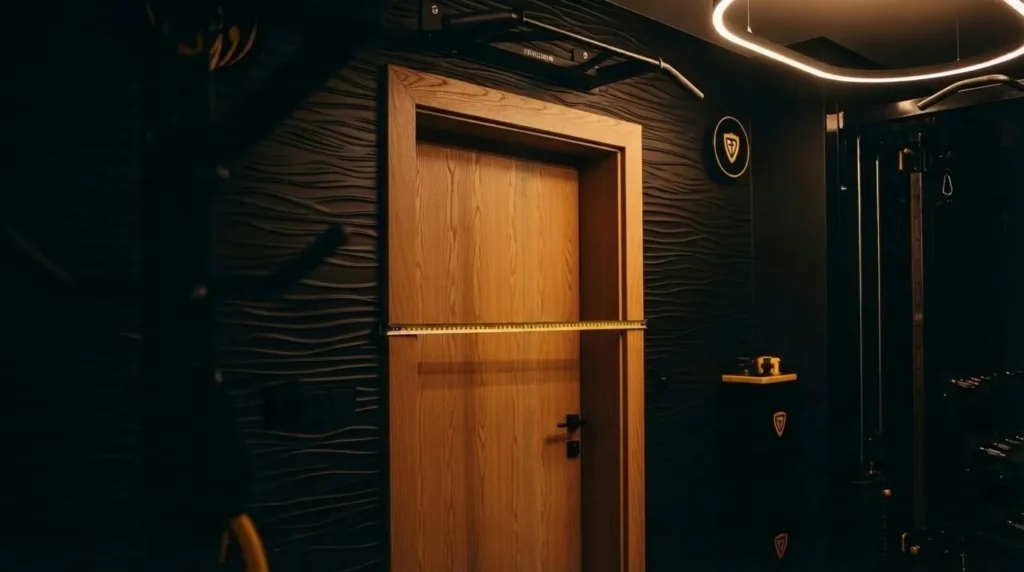
Check the Door Frame
Your door frame must meet these conditions:
- Solid wood or reinforced frame
- Flat surface contact area
- Width within the bar’s adjustable range
- No loose trim or decorative molding
Weak or decorative door frames can cause the bar to slip or lose pressure during workouts.
Types of Pull Up Bars and Their Installation Methods
Not all pull-up bars install the same way. Understanding the mechanism helps you follow the correct installation process.
Adjustable Doorway Pull Up Bars
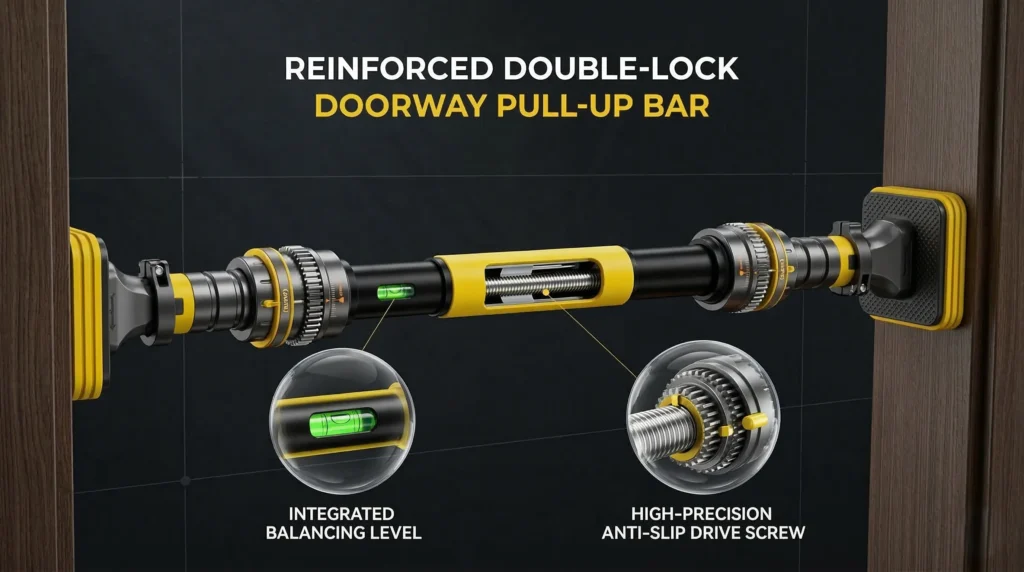
These are the most common bars used for pull up bar installation at home. They use a telescopic expansion system.
How they work:
- The bar twists outward to extend
- Rubber pads press against the door frame
- Internal locking systems prevent rotation
This type is also known as an adjustable pull up bar installation system because the width can expand to fit different doorways.
Hook-Style Doorway Bars
Hook-style bars sit on top of the door frame using leverage rather than pressure.
Installation involves:
- Hanging the bar on the door frame
- Ensuring the support brackets rest flat on the wall
These can be straightforward to position, but their frame requirements vary by model and may differ from pressure-mounted bars.
Wall-Mounted Pull Up Bars
Wall bars are installed using screws or bolts.
These require:
- drilling into studs or concrete walls
- permanent mounting hardware
Because this guide focuses on pull up bar installation without screws, doorway bars remain the most practical option for home workouts.
How to Install a Pull Up Bar in a Doorway (Step-by-Step)
If you’re wondering how to install a pull up bar in a doorway, follow this step-by-step process.
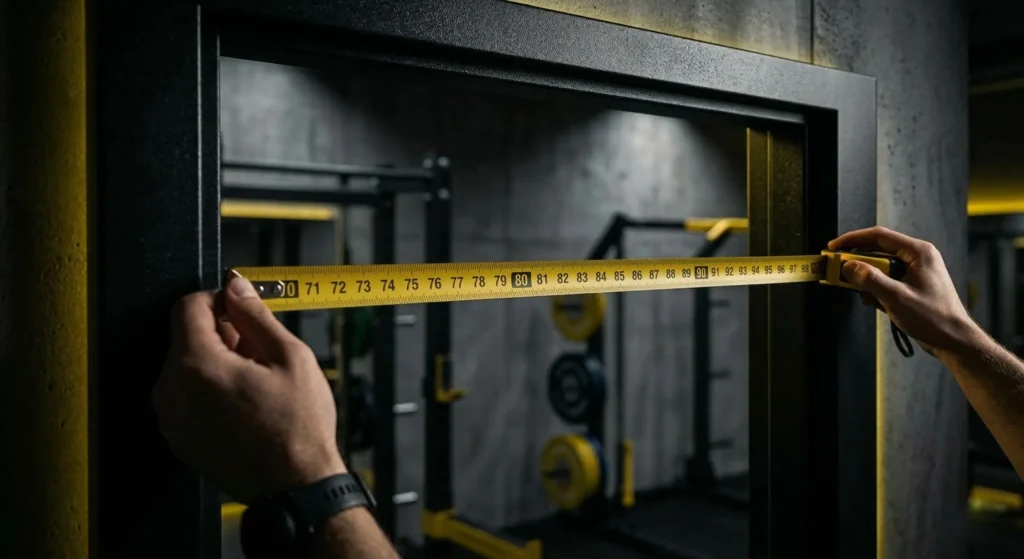
Step 1 – Measure the Doorway
First measure the internal width of your door frame.
Most adjustable bars fit between:
70 cm – 100 cm
Check the manufacturer’s recommended range before installing.
Step 2 – Extend the Adjustable Bar
Rotate the bar until it begins expanding toward the door frame.
Keep extending until the rubber pads touch both sides of the frame.
Do not fully tighten yet.
Step 3 – Center the Bar
Position the bar evenly so both ends contact the door frame at the same height.
This ensures balanced pressure during workouts.
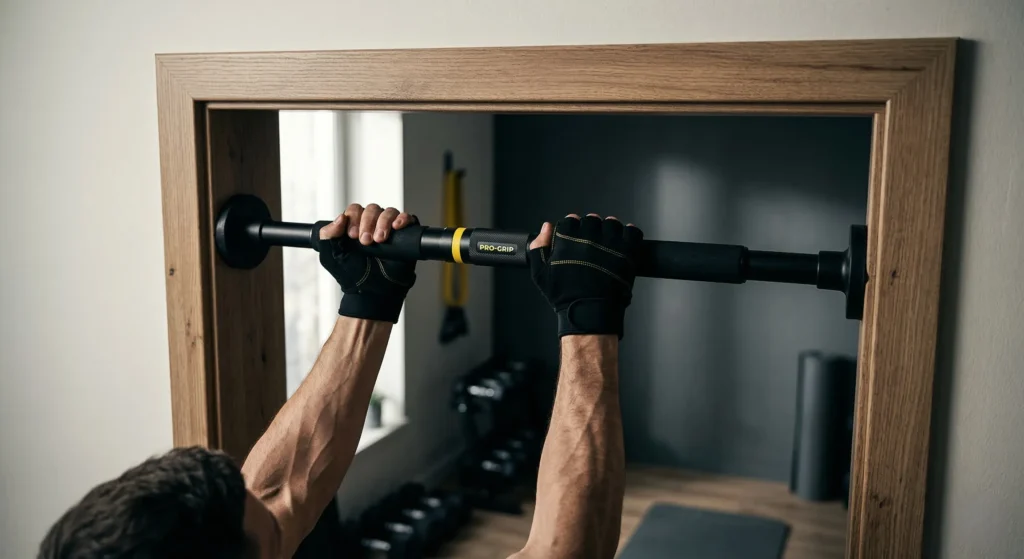
Step 4 – Tighten the Bar
Rotate the bar further until it creates strong pressure against the frame.
Most adjustable bars use internal tension mechanisms to lock the bar in place.
Some advanced models include:
- anti-rotation locks
- safety gear systems
- bubble level indicators
These features help prevent accidental slipping.
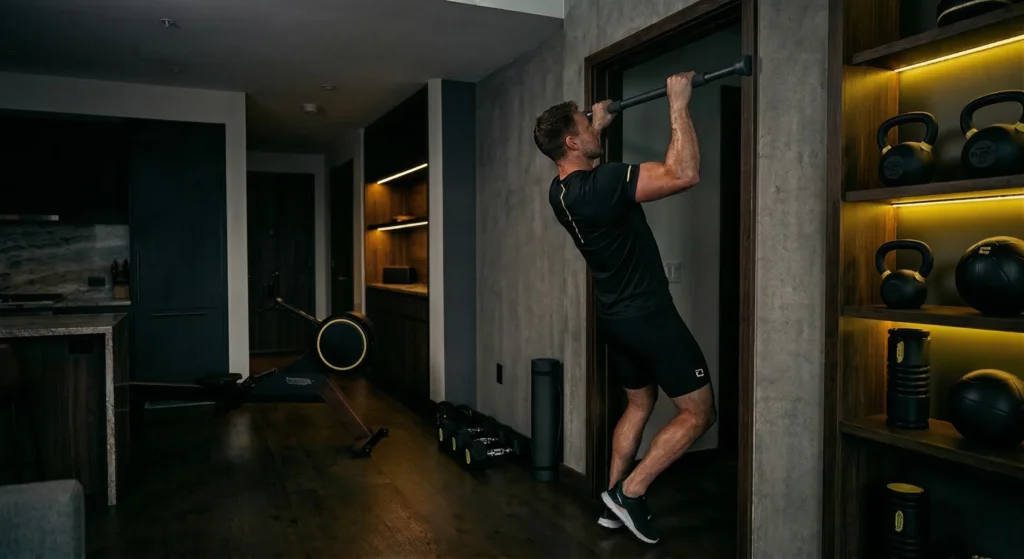
Step 5 – Test the Installation
Before performing pull-ups, always test the bar with partial body weight.
Testing process:
- Hold the bar with your hands
- Slowly add weight
- Check for rotation or movement
If the bar moves, tighten it further.
How to Install a Pull Up Bar Without Screws
Many people prefer pull up bar installation without screws because it avoids permanent damage to walls or door frames.
Adjustable doorway bars are specifically designed for this type of installation.
They rely on:
- expansion pressure
- rubber anti-slip pads
- internal locking mechanisms
Advantages of screw-free installation:
- renter-friendly setup
- quick removal
- portable installation
- minimal wall damage
However, the door frame must still be strong enough to support body weight.
How to Install Pull Up Bar Without a Door Frame
Some homes do not have suitable door frames. In these cases, you may wonder how to install pull up bar without door frame support.
Here are alternative solutions.
Wall Mounted Bars
If you have access to a solid concrete wall, you can install a wall-mounted pull-up bar.
This requires:
- drilling holes
- installing anchor bolts
- mounting a steel bracket bar
Power Towers
Power towers are freestanding workout stations that support pull-ups without any wall installation.
These are ideal for people who prefer a permanent home gym setup.
Outdoor Pull Up Bar Installation
If indoor installation isn’t possible, some people prefer outdoor pull up bar installation.
Outdoor setups usually involve:
- mounting bars on steel frames
- installing bars between posts
- attaching bars to garage beams
Outdoor installations require weather-resistant equipment and proper structural support.
Adjustable Pull Up Bar Installation Tips
Even though adjustable bars are easy to install, a few tips can significantly improve safety.
Ensure Equal Pressure
Both sides of the bar must press equally against the frame.
Uneven pressure can cause slipping.
Avoid Smooth Metal Frames
Metal frames may reduce friction.
Frame material and surface finish affect friction and compatibility, so follow the bar manufacturer’s requirements rather than assuming one material is always safer.
Retighten Periodically
Adjustable bars can loosen slightly over time.
Check the tightness before each workout session.
Common Mistakes During Pull Up Bar Installation
Many installation problems occur because of small mistakes.
Here are the most common issues.
Installing on Weak Frames
Decorative frames or hollow wood structures may not support body weight.
Over-tightening the Bar
Too much pressure can damage door frames.
Tighten only until the bar feels secure.
Skipping Safety Tests
Always test the installation before doing full pull-ups.
Exercises After Installing Your Pull Up Bar
Once the installation is complete, you can perform many effective exercises.
Common exercises include:
- pull-ups
- chin-ups
- dead hangs
- hanging knee raises
- assisted pull-ups
These exercises build strength in the back, arms, shoulders, and core.

Related Pull-Up Bar Guides
- Best Doorway Pull-Up Bar for Home Workouts
- What Is an Adjustable Pull-Up Bar?
- How to Do Pull Ups at Home
- Best Pull-Up Bars for Home in India
Final Thoughts
Proper pull up bar installation at home is essential for safe and effective workouts. Most modern doorway bars use adjustable telescopic systems that allow quick installation without drilling or screws.
By choosing the correct door frame, tightening the bar properly, and testing the setup before exercising, you can safely perform pull-ups and other bodyweight exercises from the comfort of your home.
For people looking for a renter-friendly workout setup, adjustable doorway pull-up bars remain one of the simplest and most effective home fitness tools.
FAQs
How do you install a pull up bar at home?
Most home pull-up bars install inside a doorway using an adjustable telescopic design. The bar expands by twisting until rubber pads press firmly against the door frame. Once centered and tightened, the bar stays in place through pressure and locking mechanisms, allowing safe pull-ups without drilling or permanent installation.
Can you install a pull up bar without screws?
Yes. Many modern doorway pull-up bars use pressure-based installation instead of screws. These adjustable bars expand between two sides of a door frame and rely on rubber pads and internal locks to stay secure. This makes them ideal for renters or people who want a removable home workout setup.
How do you install a pull up bar in a doorway?
To install a doorway pull-up bar, measure the door frame width, extend the adjustable bar until both ends touch the frame, and tighten it by rotating the bar. Make sure the bar is centered and secure before testing it with partial body weight to confirm stability.
Are doorway pull up bars safe to install at home?
Doorway pull-up bars are safe when installed correctly on a strong door frame. The frame should be solid wood or reinforced material, and the bar must be tightened properly. Always test the bar with partial body weight before performing full pull-ups to ensure it does not rotate or slip.
What door frames work best for pull up bar installation?
A doorway pull-up bar should be tight enough that it does not rotate or slide when you hang from it. However, it should not be over-tightened to the point that it damages the door frame. The goal is firm pressure with even contact on both sides of the frame.
Can you install a pull up bar without a door frame?
Yes, but you will need alternative options. If a door frame is not available, you can install wall-mounted pull-up bars, ceiling-mounted bars, or use a freestanding power tower. These setups require more space and sometimes drilling, but they provide a stable pull-up training station.
Do adjustable pull up bars damage door frames?
When installed correctly, adjustable pull-up bars typically do not damage door frames. Most models use rubber or PVC pads to distribute pressure and protect the frame surface. Problems usually occur only when bars are installed on weak frames or tightened excessively.
How long does it take to install a pull up bar?
Most adjustable doorway pull-up bars can be installed in less than five minutes. The installation process simply involves measuring the doorway width, extending the bar until it fits tightly between the frame, and testing the stability before performing exercises.
What exercises can you do after installing a pull up bar?
After installing a pull-up bar, you can perform exercises such as pull-ups, chin-ups, dead hangs, hanging knee raises, and assisted pull-ups. These exercises help strengthen the back, shoulders, arms, and core, making pull-up bars one of the most effective tools for home bodyweight training.
How tight should a doorway pull up bar be?
A doorway pull-up bar should be tight enough that it does not rotate or slide when you hang from it. However, it should not be over-tightened to the point that it damages the door frame. The goal is firm pressure with even contact on both sides of the frame.