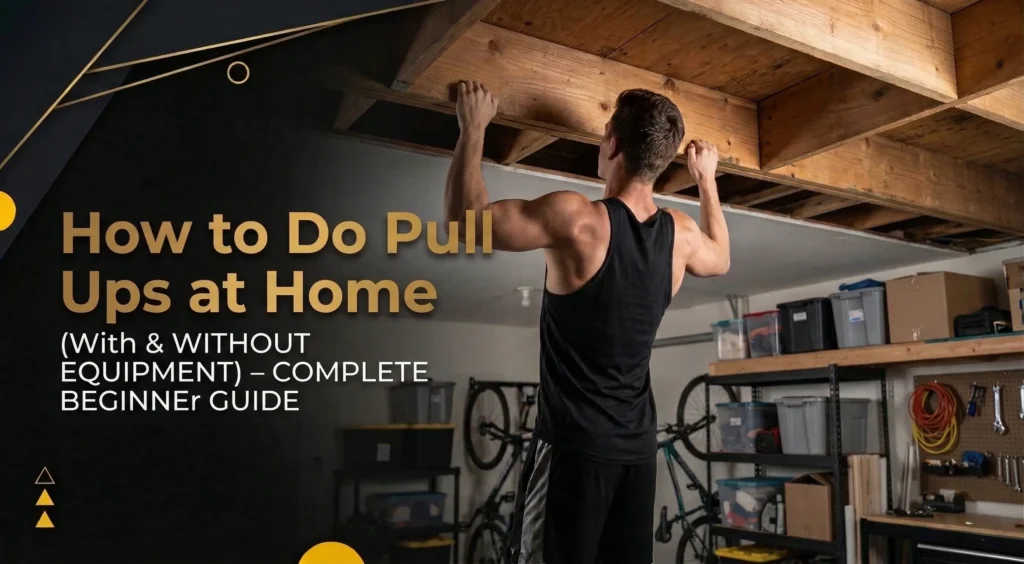
Pull ups are one of the most effective upper-body exercises you can do and you don’t need a gym to master them. Whether you have equipment or not, you can build serious back, arm, and grip strength from home with the right setup and progression.
Can You Really Do Pull Ups at Home?
Yes you can absolutely do pull ups at home, either with a proper bar setup or using smart strength-building alternatives. What matters most is having a stable anchor point and following a progression plan. You don’t need machines. You need structure and consistency.
Pull ups at home are not limited to advanced athletes. Beginners can learn pull ups at home safely by starting with foundational exercises and gradually progressing toward full repetitions.
What You Need to Do Pull Ups at Home
There are two realistic paths:
- Using a pull up bar (most effective)
- Using bodyweight alternatives (when no equipment is available)
Let’s break them down properly.
Related Pull-Up Bar Guides
- Best Pull-Up Bars for Home in India
- Best Doorway Pull-Up Bar for Home Workouts
- What Is an Adjustable Pull-Up Bar?
- How to Install a Doorway Pull-Up Bar Safely
Option 1 – Using a Pull Up Bar (Most Effective)
If your goal is long-term progress, using a pull up bar for home is the most practical solution. It gives you true vertical pulling mechanics and measurable strength development.
1. Doorway Pull Up Bar
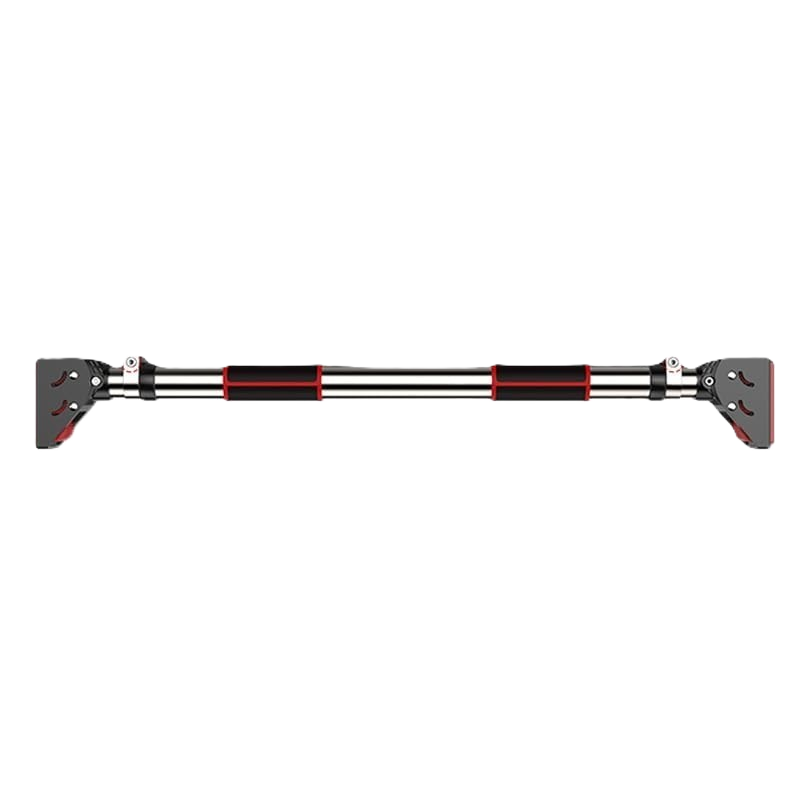
This is the most popular bar for pull ups at home. It uses expansion pressure or leverage hooks to stay secured in a door frame. It’s renter-friendly and portable.
If you’re considering equipment seriously, explore adjustable pull up bars that fit different doorway widths.
2. Wall Mounted Pull Up Bar for Home
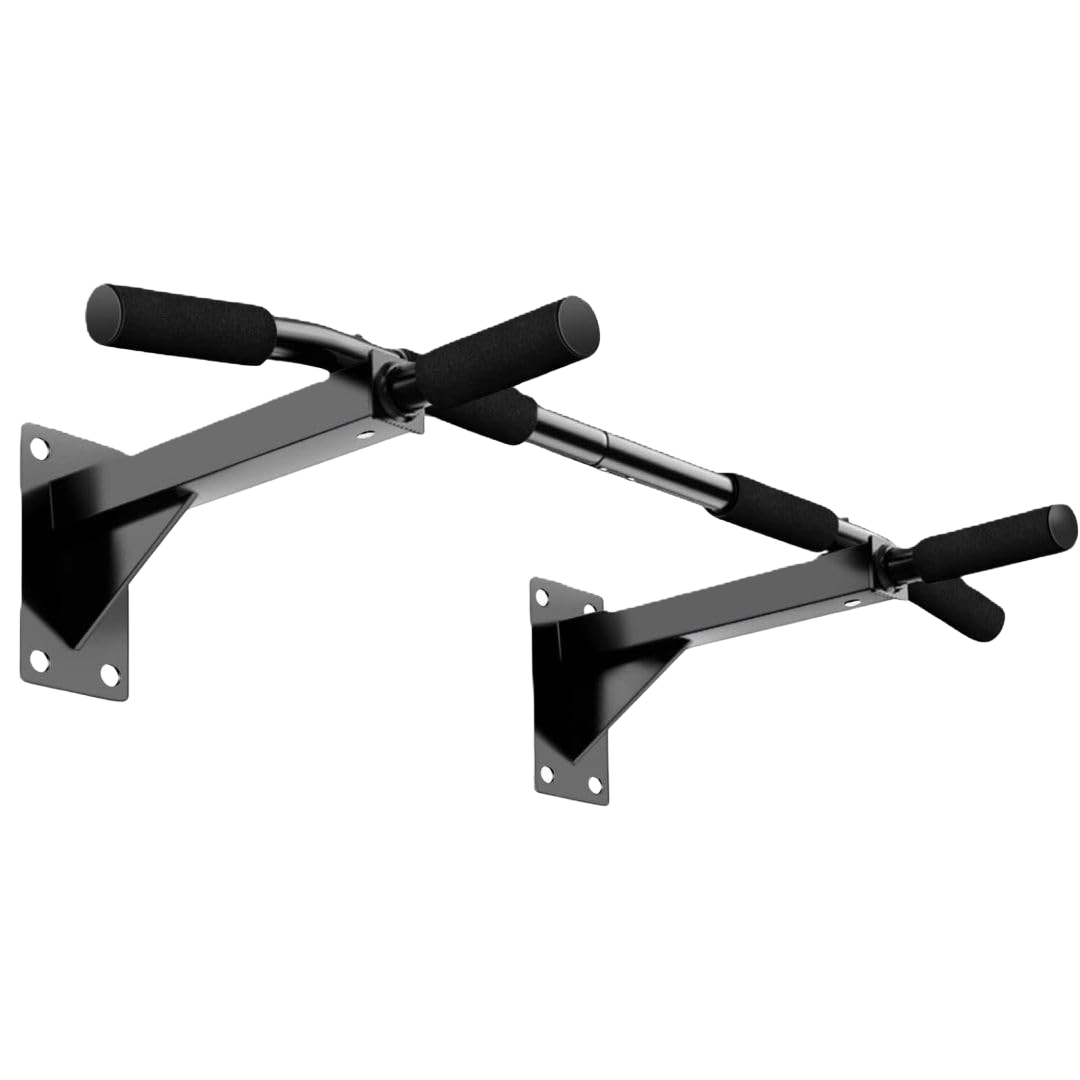
A wall mounted pull up bar for home is more permanent. It requires drilling and solid wall support but offers maximum stability. Ideal for dedicated home gym setups.
3. Ceiling-Mounted Bar
Installed into ceiling joists. Best for high ceilings and long-term training. Not beginner-friendly for installation.
4. Power Tower
A standing unit that supports pull ups, dips, and leg raises. Sometimes referred to as a pull up machine for home, though technically it’s bodyweight equipment.
PULL-UP BAR
-
Renter-Friendly Installation
-
No Drilling Required
-
Highly Portable
-
Adjustable Width
-
Ideal for: Small apartments, casual training.
PULL-UP BAR
-
Requires Permanent Mounting
-
High Stability and Weight Capacity
-
Dedicated Workout Space Needed
-
Multiple Grip Options
-
Ideal for: Dedicated home gym setups, intense training.
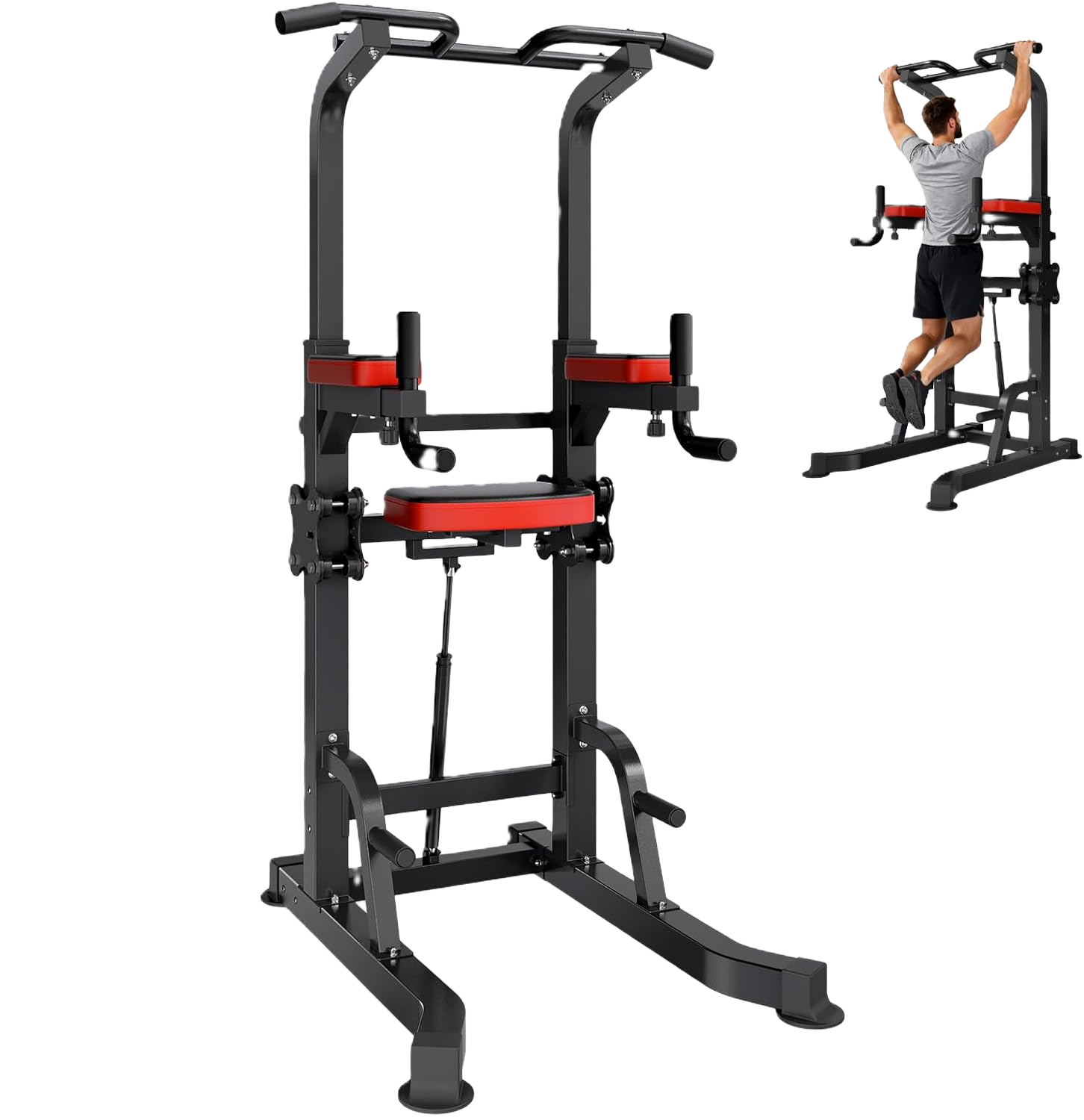
-
Free-Standing, No Installation
-
Large Footprint
-
Multi-Station: Pull-ups, Dips, Leg Raises
-
Supports Advanced Exercises
-
Ideal for: Complete multi-functional home gym, larger spaces.
If you’re building a serious setup, this category falls under pull up equipment for home and home pull up gym equipment.
For most users, a hanging pull up bar for home is the most balanced option between practicality and cost.
Option 2 – No Equipment Alternatives
If you don’t have equipment, you can still train pulling strength.
But understand this clearly:
These methods build strength they are not true vertical pull ups.
1. Sturdy Door Frame Edge
Some people attempt pull ups at home without bar by gripping the top of a solid door frame. This only works if the frame is structurally reinforced.
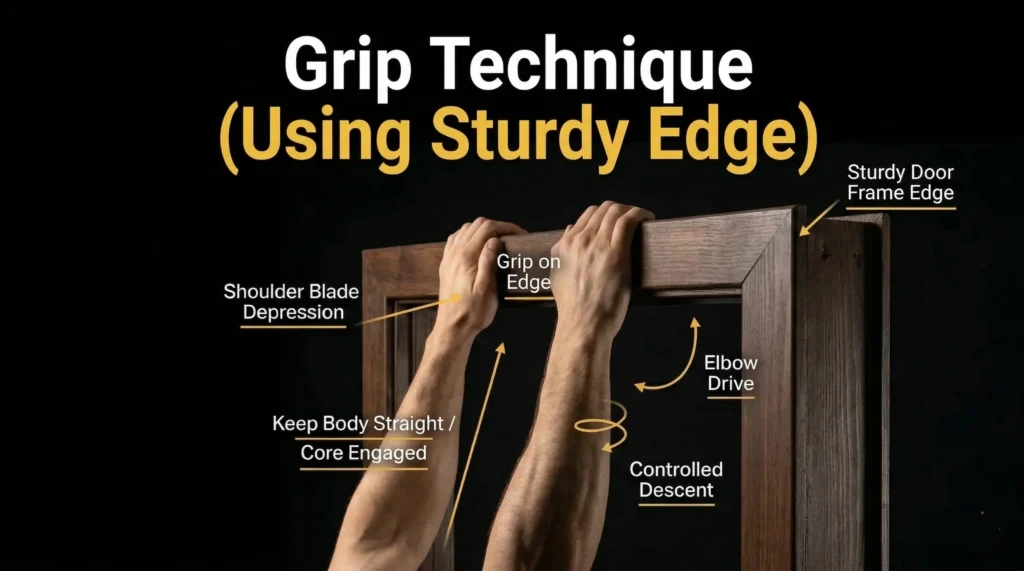
Be cautious. Decorative trims will not support bodyweight.
2. Table Rows (Inverted Rows)
Also called inverted pull up at home or horizontal pull ups. Lie under a strong table, grip the edge, and pull your chest up.
This is one of the safest pull up alternatives at home.
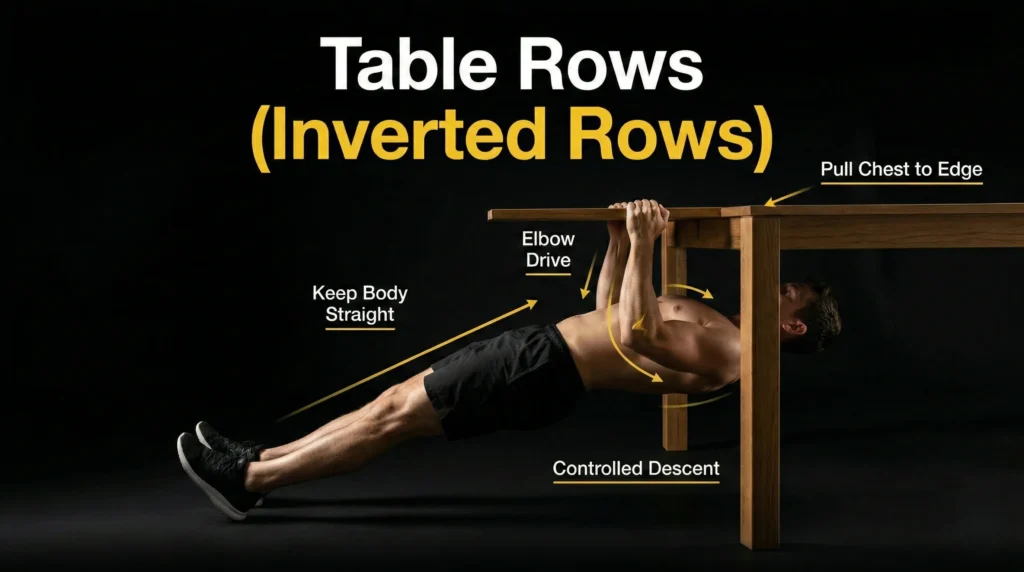
You may also see this referred to as Australian pull ups at home.
3. Bedsheet or Towel Rows
Loop a bedsheet over a sturdy door and lean back while holding both ends. Pull yourself forward.
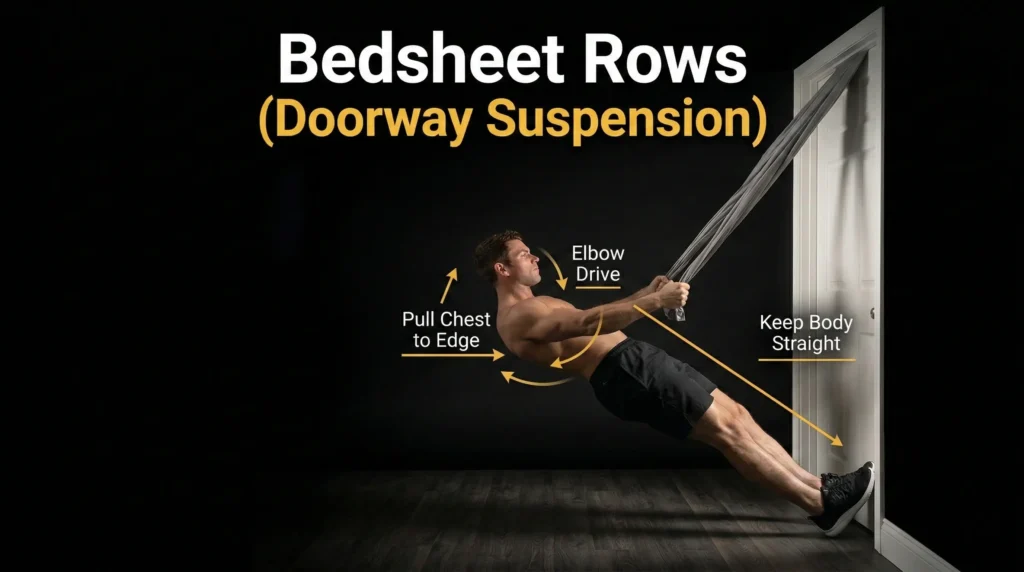
This works as an alternative to pull ups at home, but only if the door is solid and properly closed.
4. Playground Bars
If available nearby, these give you real vertical pulling mechanics.
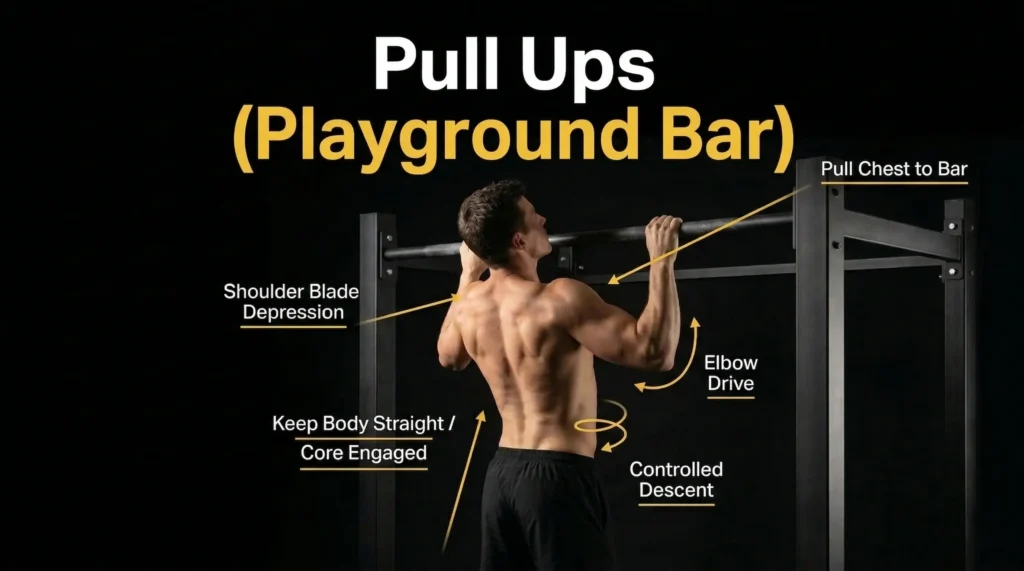
These methods are the closest options when you want to train pull ups at home with no equipment.
How to Do Pull Ups at Home Using a Doorway Bar (Step-by-Step Setup Guide)
Now let’s cover the most practical method in detail.
If you’re serious about progression, this is the safest entry into consistent training.
Step 1: Check Door Frame Compatibility
Before installing:
• Measure width (most bars fit 70–95 cm)
• Ensure solid wood frame
• Avoid decorative trim
• Check surface flatness
A weak frame can cause slipping. Never skip this.
Step 2: Install and Lock the Bar Properly
For adjustable bars:
• Extend evenly
• Tighten gradually
• Engage safety locks
• Avoid overextending beyond max range
Test tension before hanging fully.
This is where adjustable pull up bar for home models are useful because they provide width flexibility.
Step 3: Test With Partial Bodyweight
Do not jump straight into reps.
Instead:
• Place feet lightly on ground
• Slowly transfer weight
• Listen for shifting
• Check rotation
Only after confirming stability should you proceed.
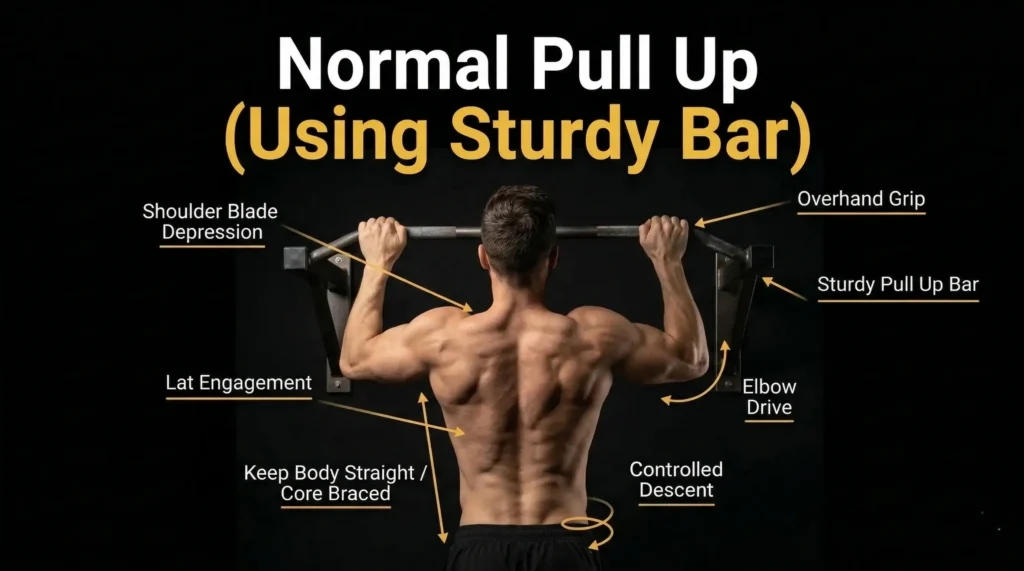
Step 4: Proper Pull Up Form
Many beginners fail not because of strength but because of poor mechanics.
Here’s the correct structure:
• Grip slightly wider than shoulders
• Engage shoulders before pulling (avoid dead hang shrugging)
• Pull elbows down toward ribs
• Chin clears the bar
• Controlled descent (2–3 seconds down)
Do not:
• Kick legs
• Swing
• Half-rep
This applies whether you’re doing home pull up bar exercises or full bodyweight sets.
How to Do Pull Ups at Home Without a Bar
If you’re specifically searching for how to do pull ups at home without bar, here’s the honest answer:
You can build pulling strength but you cannot replicate full vertical mechanics without a stable overhead anchor.
Still, these methods are effective for progression.
Method 1 – Door Frame Grip Pull
Grip the top inner frame and lean back slightly before pulling.
Limited range of motion. Useful for early-stage strength building.
Method 2 – Towel or Bedsheet Rows
Attach towel to a secure point and lean backward.
This builds mid-back engagement and grip endurance.
It’s a form of assisted pull up at home training progression.
Method 3 – Under-Table Rows (Horizontal Pull Ups)
Lie under a sturdy table.
Pull chest toward edge.
This is one of the best alternative exercise for pull ups at home.
Also known as:
• Horizontal pull ups at home
• Incline pull up at home
• Australian rows
Method 4 – Backpack Weighted Rows
Load a backpack with books and perform bent-over rows.
This improves pulling strength but does not train vertical scapular movement.
These are exercises to help with pull ups at home not replacements.
How to Start Pull Ups at Home for Beginners
If you cannot do one full rep yet that’s normal.
Here’s the realistic progression.
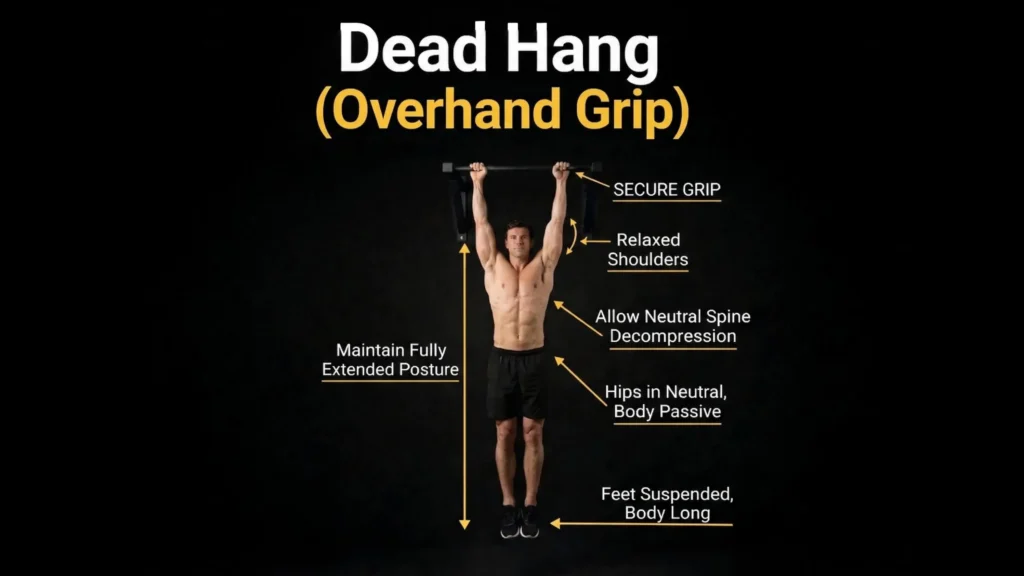
Step 1: Master Dead Hangs
Dead hangs build grip and shoulder stability.
Hold for 10–30 seconds.
This is foundational for all pull up exercises at home.
For deeper breakdown, see dead hang benefits.
Step 2: Scapular Pulls
Hang and pull shoulders down without bending elbows.
Teaches lat activation.
Step 3: Negative Pull Ups
Jump to top position.
Lower yourself slowly for 3–5 seconds.
Builds eccentric strength.
Step 4: Assisted Pull Ups
Weekly Beginner Pull Up Plan (No Gym Needed)
Consistency beats intensity. If you’re learning how to practice pull ups at home, structure matters more than motivation.
Below is a simple 4-day rotation designed for beginners.
Pull-Up Workout Plan
| Day | Focus | Exercises |
|---|---|---|
| Day 1 | Grip + Base Strength | Dead hang (3x20s), Inverted rows (3×8–10) |
| Day 2 | Eccentric Strength | Negative pull ups (4×3–5), Scapular pulls (3×8) |
| Day 3 | Rest or Mobility | Shoulder mobility + light hangs |
| Day 4 | Assisted Progression | Assisted pull ups (4×5–8), Rows (3×8) |
Repeat weekly.
After 2–3 weeks:
• Increase hang duration
• Increase row reps
• Slow down negatives
• Reduce assistance
This works whether you’re training with home pull up bar workout setups or pull ups at home without equipment.
Common Mistakes When Doing Pull Ups at Home
Learning how to do pull ups easily at home isn’t about shortcuts; it’s about avoiding technical errors. Our pull-up mistakes guide covers the most common form problems in more detail, while Master the Dead Hang covers the hanging progression.
1. Loose Doorway Installation
Poor setup is one avoidable source of risk, so treat the anchor point and equipment instructions as part of the exercise—not an afterthought.
Always:
• Test tension
• Avoid decorative trims
• Avoid weak drywall
If using a standing pull up bar for home, ensure stable floor positioning.
2. Swinging / Kipping
Momentum hides weakness.
Control the movement.
If you cannot perform strict reps, use assisted pull up at home methods instead.
3. Half Reps
Chin barely touching bar doesn’t count.
Full range = chin clearly over bar + controlled descent.
4. Ignoring Shoulder Activation
Dead hangs without scapular engagement cause strain.
Always initiate pull by depressing shoulders.
This is why dead hangs are foundational.
5. Overtraining
Pull ups stress elbows and shoulders.
Training daily without recovery slows progress.
Many beginners do well with roughly 2–4 sessions per week, but recovery needs vary with training volume, exercise intensity, and individual experience.
Pull Ups at Home vs Gym – Is There a Difference?
Many wonder whether training at home limits growth.
Let’s compare objectively.
Home vs. Gym Comparison
| Factor | Home | Gym |
|---|---|---|
| Stability | Depends on setup | Usually fixed & rigid |
| Load Options | Bodyweight + weighted pull ups at home | Wide load options |
| Convenience | Maximum | Travel required |
| Progression | Slower but consistent | Faster with equipment |
If your setup is solid especially with adjustable pull up bar for home results are comparable.
Gym access becomes valuable mainly when adding weighted pull ups at home becomes limited.
Advanced Progressions & Variations at Home
Once you can perform 8–10 strict reps, progression matters.
1. Weighted Pull Ups at Home
Add:
• Backpack with books
• Weight vest
• Dumbbell between feet
Ensure your bar supports added load.
2. Incline & Horizontal Variations
• Incline pull up at home (feet elevated rows)
• Inverted pull ups at home
• Australian pull ups
These improve mid-back density and help improve pull ups at home overall.
3. Grip Variations
• Wide grip
• Neutral grip
• Close grip
These fall under pull up variations at home and allow different muscle emphasis.
Safety Tips for Home Pull Up Training
Training at home requires personal responsibility.
Test Before Every Session
Even stable setups should be checked briefly.
Avoid Decorative Frames
Many door trims are not structural.
Warm Up Properly
• Arm circles
• Scapular pulls
• Light hangs
Stop on Sharp Pain
Muscle fatigue is normal.
Joint pain is not.
If you’re building a long-term setup, explore pull up bars for home options suited for your space.
Pull Up Equipment for Home – What’s Actually Worth It?
The internet is full of random pull up ideas at home.
But realistically, you only need:
- A reliable pull up bar
- Resistance band (optional)
- Time and consistency
You do not need complicated pull up machine for home systems unless building a full gym.
If choosing between equipment types, remember:
Doorway bars → portable & renter-friendly
Wall-mounted → permanent & stable
Power tower → multi-function
Each fits different lifestyles.
Final Take
If you’re serious about learning how to do pull ups at home, stop searching for hacks.
Choose one setup.
Follow progression.
Train consistently.
Whether you’re using pull ups equipment for home or working with pull ups at home no equipment, the principle stays the same:
Strength builds gradually.
If you’re planning long-term training, start with reliable equipment and build skill systematically.
That’s how you move from zero reps to strong, controlled pull ups without stepping into a gym.
FAQs
Can I build muscle doing pull ups at home?
Yes. Pull ups activate the lats, biceps, rear delts, and core. When performed consistently with proper form and progressive overload such as increasing repetitions or adding weight they can build significant upper-body strength and muscle even when training at home.
Are doorway pull up bars safe?
Yes, doorway pull up bars are safe when installed correctly on a solid door frame and tested before full bodyweight loading. Always ensure the bar is tightened properly and that the frame is structurally strong enough to support your weight.
How long does it take to do your first pull up?
Most beginners achieve their first strict pull up within 2–6 weeks when practicing consistently. Building grip strength, mastering dead hangs, and performing negative pull ups can accelerate progress toward the first full repetition.
Can beginners do pull ups at home?
Yes. Beginners can safely learn pull ups at home by starting with foundational exercises such as dead hangs, assisted pull ups, and inverted rows. Gradually increasing strength and control allows most beginners to progress toward full pull ups over time.
What if I can’t do one rep yet?
If you cannot perform a full pull up yet, begin with:
• Dead hangs
• Assisted pull ups
• Inverted rows
These exercises strengthen the back, arms, and grip so your body can gradually handle full pull up repetitions.
What is the best alternative to pull ups at home?
Inverted rows and Australian pull ups are among the most effective alternatives when a pull up bar is not available. These horizontal pulling movements strengthen the same major muscle groups and help build the strength required for future pull ups.
Can I improve pull ups without equipment?
Yes. Horizontal pulling exercises such as inverted rows, along with grip training and slow negative pull ups, can improve pulling strength. However, performing full pull ups eventually requires some form of overhead support like a bar.
Do pull ups work the entire upper body?
Pull ups primarily target the latissimus dorsi, but they also engage the biceps, shoulders, forearms, and core muscles. Because multiple muscle groups work together during the movement, pull ups are considered one of the most effective compound upper-body exercises.
How many pull ups should beginners aim for?
Beginners should focus on building strength rather than chasing high numbers. Starting with 1–3 controlled repetitions per set is common. As strength improves, gradually increasing to 8–10 strict pull ups is a strong benchmark for overall upper-body fitness.
Is it better to do pull ups every day?
Daily pull ups are not necessary for most beginners. Muscles need recovery time to grow stronger. Training pull ups 2–4 times per week with rest days in between typically leads to better strength development and reduces the risk of overuse injuries.