You’ve probably noticed the dead hang exercise popping up everywhere lately.
One fitness creator says it’s the secret to stronger shoulders. Another swears by it for better grip strength. Someone else claims it improves posture, decompresses the spine, and even helps with pull-ups.
Some of those claims have merit, but the benefits depend on how the hang is performed, the person’s training level, and what they mean by terms such as “shoulder health” or “spinal decompression.”
When performed with appropriate dead hang form, this simple exercise can train grip endurance and help you practice hanging control. Some people also find hanging comfortable for their shoulders or back, but those effects vary by person and should not be treated as guaranteed medical benefits.
The problem is that dead hangs look incredibly simple.
You grab a pull-up bar, hang there, and wait for the timer to end. Because it looks so easy, many people assume there’s no way to do it incorrectly.
That’s where things go wrong.
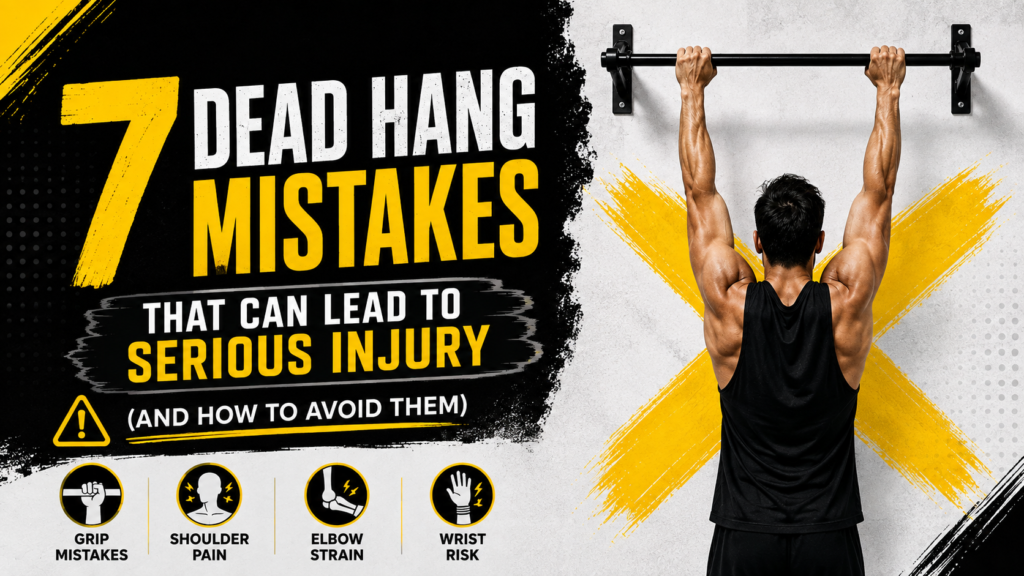
Small mistakes in your dead hang technique can slowly put unnecessary stress on your shoulders, elbows, and wrists. You may not feel anything after your first workout. You might not even notice after your tenth. Over time, though, those little mistakes can add up and lead to pain or even a dead hang injury.
The good news is that every one of these mistakes is easy to fix.
Let’s look at the seven most common dead hang mistakes so you can enjoy all the dead hang benefits without putting your joints at risk. For the technique side, see our Master the Dead Hang guide.
1. Using a Thumbless “Monkey Grip”
At first, a thumbless grip feels comfortable.
Many beginners naturally place their thumb on the same side of the bar as their fingers. This is known as a thumbless grip dead hang, and while it may seem harmless, it becomes risky once your hands begin to tire.
Picture this.
You’re halfway through your set.
Your forearms are burning.
Your fingers slowly start losing their grip.
Without your thumb securing the bar, your hand can suddenly slip. That unexpected drop can easily lead to a wrist sprain or an awkward fall.
The Fix
Wrap your thumb underneath the bar so it locks against your fingers.
This creates a much stronger and safer dead hang grip, especially during longer holds.
If sweaty hands are making the exercise difficult, use lifting chalk instead of switching to a thumbless grip.
2. Jumping Straight Into the Hang
Think about your warm-up routine.
You probably wouldn’t walk into the gym and immediately attempt your heaviest squat or deadlift.
Your shoulders deserve the same preparation.
Many people jump up, grab the bar, and instantly load their entire bodyweight onto cold muscles and joints. That sudden impact places unnecessary stress on your shoulders, lats, and upper back before they’re ready.
It only takes one awkward grab to strain a muscle before your workout has even started.
The Fix
Use a box, bench, or step to reach the bar.
Grip it first.
Then slowly lower yourself into position under control.
Your joints will thank you for taking those extra few seconds.
3. Shrugging Your Shoulders Toward Your Ears
This mistake happens so gradually that most people don’t even notice it.
You start your hang with good posture.
Then your grip begins to fatigue.
Without realizing it, your shoulders creep higher and higher until they’re sitting close to your ears.
This common shoulder shrugging dead hang mistake shifts the workload away from your lats and places extra tension on your neck and upper traps.
Over time, an uncomfortable shoulder position may contribute to irritation or pain, particularly for someone who already has limited shoulder mobility. Persistent or sharp pain is a reason to stop rather than trying to push through it.
The Fix
If you’re performing a passive dead hang, allow your shoulders to stay relaxed naturally.
If you’re doing an active dead hang, gently pull your shoulder blades down and back while keeping your neck relaxed.
Relaxed shoulders do not mean collapsed shoulders.
Strong posture should never feel forced.
4. Bending Your Elbows as You Get Tired
This usually happens around the point where your forearms are screaming for a break.
Your brain starts looking for an easier option.
You think, “I’ll bend my elbows just a little.”
Almost everyone has done it.
Unfortunately, that small bend changes the exercise completely.
Instead of performing a proper dead hang, you’ve turned it into a flexed-arm hang. Your biceps and elbow tendons now carry much more of the load.
Repeatedly hanging with bent elbows can shift more work to the biceps and elbow tissues. If that position causes pain or irritation, reduce the duration or stop the exercise instead of forcing the set.
The Fix
Keep your arms completely straight throughout the entire hold.
If you can no longer maintain straight arms, end the set.
Stopping at the right time is smarter than forcing a few extra seconds with poor form.
5. Progressing Too Quickly
Progress feels exciting.
You manage a 20-second hang this week.
Next week you decide to aim for a full minute.
Or maybe you see someone online hanging with a weight belt and decide to try it yourself.
That approach often causes more problems than progress.
Your muscles adapt relatively quickly.
Your tendons, ligaments, and connective tissues take much longer.
Increasing your hold time too fast can lead to dead hang wrist pain, forearm strain, and shoulder irritation.
The Fix
Increase your hang time gradually.
Increase duration in small, tolerable steps rather than following a rigid weekly target. If your grip or joints feel worse after a session, hold the same duration or reduce it before progressing again.
Once you can comfortably perform a proper dead hang for 30 to 45 seconds with excellent dead hang form, then you can consider adding resistance.
Be patient.
Your joints will appreciate it.
6. Holding Your Breath
Have you ever noticed what happens when an exercise gets difficult?
Most people stop breathing without realizing it.
Your grip tightens.
Your forearms burn.
Your body becomes tense.
Instead of helping, holding your breath makes the exercise feel even harder. It increases unnecessary tension throughout your body and can temporarily raise your blood pressure.
The Fix
Focus on slow, controlled breathing.
Take steady breaths through your nose whenever possible.
Relaxed breathing helps maintain better dead hang posture, reduces unnecessary tension, and often allows you to hold the position longer.
7. Dropping Off the Bar
Many people think the exercise ends the moment they let go.
It doesn’t.
In fact, this is where a surprising number of dead hang injuries happen.
After hanging for 30 or 40 seconds, your muscles are already fatigued.
If you simply let go and drop to the floor, that impact travels through your wrists, shoulders, knees, ankles, and lower back.
One careless landing can undo all the good work you just completed.
The Fix
Use a box or bench whenever possible.
Step down under control instead of dropping.
Treat your exit with the same attention you gave your setup.
Good technique starts before the hang and finishes only when both feet are safely back on the ground.
How Long Should You Dead Hang?
If you’re new to the dead hang exercise, don’t worry about chasing impressive numbers.
Focus on quality first.
Here are some general guidelines:
- Beginners: 10 to 20 seconds
- Intermediate: 30 to 45 seconds
- Advanced: 60 seconds or longer with perfect form
A shorter hold with excellent dead hang technique is always better than a longer hold filled with bad habits.
The Bottom Line
The dead hang exercise is one of the simplest ways to build stronger shoulders, improve grip strength, and support long-term shoulder health.
The key is performing it correctly.
Use a secure dead hang grip.
Maintain proper dead hang form.
Progress slowly.
Breathe naturally.
Respect your body’s limits.
Control both the beginning and the end of every set.
If you’ve been wondering how to do a dead hang safely, remember this.
Success doesn’t come from hanging the longest.
It comes from hanging with the best technique.
Start with the basics.
Practice consistently.
Improve a little every week.
Months from now, your grip will be stronger, your shoulders will feel healthier, and you’ll understand why the dead hang has earned its reputation as one of the best bodyweight exercises for building strength and resilience.
Related Dead Hang & Pull-Up Guides
- Dead Hang Benefits: What 30 Days of Hanging Changes
- Master the Dead Hang: Form & Variations
- How to Do Pull Ups at Home
- Best Pull-Up Bars for Home in India
Can dead hangs actually cause injury?
Yes, but almost never from the hang itself. Injury usually comes from technique errors, jumping in without warming up, bad grip, or dropping off the bar carelessly rather than the exercise being inherently risky.
Why does my shoulder hurt after dead hangs?
Most often it’s from shrugging your shoulders up instead of keeping them relaxed and down, which shifts load into the neck and upper traps instead of your lats.
Is hanging from a bar good for your back, or can it hurt it?
It’s genuinely good for your back when done with control. It aids spinal decompression, but bad dismounts or overloading duration too fast can turn a good thing into strain.
How do I know if I’m doing a dead hang wrong?
Watch for bent elbows, shoulders creeping up to your ears, a thumbless grip, or holding your breath. Any of these is a sign your form needs a reset.
Can dead hangs make wrist or elbow pain worse?
Yes, especially if you’re progressing hold time or added weight too fast before your tendons have adapted. That’s the most common cause of wrist and elbow strain from hanging.
What’s the most common dead hang mistake beginners make?
Using a thumbless “monkey grip.” It feels natural at first but gives you no real hold once your grip starts to fatigue, which is when most slips happen.
Is it bad to bend your elbows during a dead hang?
Yes, even a slight bend shifts load into your biceps and elbow tendons instead of your shoulders and lats, and over time that’s a common path to elbow strain.
Should you hold your breath during a dead hang?
No. Holding your breath spikes tension through your whole body and makes it harder to maintain relaxed, controlled form.
Is jumping up to the bar before a dead hang risky?
Yes. Loading your full bodyweight onto cold shoulders and lats without warming up is one of the fastest ways to strain something before your set even starts.
How should you get down safely after a dead hang?
Step down onto a box or bench instead of dropping. Dropping lands your fatigued bodyweight in one jarring impact, which is where a lot of hang-related injuries actually happen.
Can adding weight to a dead hang too soon cause injury?
Yes. Tendons and ligaments adapt much slower than muscles, so adding load or duration before they’re ready is a common cause of wrist and forearm strain.
Does shrugging your shoulders during a dead hang cause harm?
It can. Shrugging shifts stress away from your lats and into your neck and traps, and repeated over time it can aggravate shoulder impingement.
How fast should you increase your dead hang time to avoid injury?
No more than about 5 seconds a week. Rushing hold time is one of the most common ways beginners turn a safe exercise into an overuse injury.
Can a dead hang injury happen even with good form?
It’s rare, but overtraining, skipping warm-ups, or hanging on days when you’re already fatigued can still lead to strain even with technically correct form.
What are the warning signs you should stop dead hanging?
Sharp pain (different from normal fatigue), numbness or tingling in your fingers, or a noticeable loss of grip control mid-hang are all signs to stop and reassess.